


- 1 day ago
- 10 min read
Choosing a first musical instrument can feel like a bigger decision than expected. A child may be drawn to the sound of a piano, fascinated by a guitar, or captivated by the violin, while parents may be wondering about age, practice requirements, cost, and long-term commitment.
The good news is that there is no single instrument that every beginner should choose. The right instrument is the one that matches the student's interests, age, learning style, goals, and willingness to practice.
When those factors line up, lessons become more enjoyable and students are more likely to stay motivated as their skills develop.
For families exploring music lessons in Napa, CA, understanding the differences between
Start With the Student, Not the Instrument
The most useful question is not, "What is the easiest instrument to learn?"
Instead, ask:
"What kind of music does this student actually want to make?"
A beginner who loves singing along to pop songs may respond differently to guitar or piano than a student who enjoys orchestral music and wants to play violin.
A child who enjoys rhythm and movement may be naturally attracted to drums, while another student may prefer the structure and visual layout of a keyboard.
This is one reason private music lessons in Napa can be valuable for beginners. One-on-one instruction gives a teacher the opportunity to understand a student's interests, experience, learning style, and goals and adapt lessons accordingly.
Napa School of Music offers private instruction for students ages 5 and up, from beginners through advanced players, with personalized lesson plans.
Before choosing an instrument, consider five factors:
Age and physical readiness
Musical interests
Learning style
Short-term and long-term goals
Willingness to practise consistently
The best choice is usually the instrument that makes the student want to come back for the next lesson.

Piano Lessons for Beginners
Piano is one of the most approachable instruments for beginners because the notes are laid out in a clear, visual pattern. Students can see the relationship between notes, chords, scales, and melodies directly on the keyboard.
Piano lessons in Napa can be a strong starting point for students who enjoy:
Playing melodies
Learning songs independently
Classical, pop, jazz, or contemporary music
Visual and structured learning
Understanding music theory
Composing or arranging music
Piano also provides a strong foundation for understanding musical concepts that can transfer to other instruments later.
Piano vs Keyboard
Families do not necessarily need to begin with a traditional acoustic piano. A digital keyboard can be a practical option when space, budget, portability, or volume are considerations.
Napa School of Music notes that students can develop foundational musicianship on either acoustic piano or digital keyboard, with skills transferring between the two.
For a young beginner who is still exploring music, a keyboard may provide a flexible starting point. Students who become more committed can transition to a full piano setup as their needs develop.
Piano may be a particularly good fit if your child enjoys structure, likes melodies, wants to learn songs, or responds well to seeing patterns.
Guitar Lessons for Beginners
Guitar is a popular choice for students who want to play recognizable songs relatively early in their learning journey.
Guitar lessons in Napa can suit students who enjoy:
Rock and pop
Folk and acoustic music
Singer-songwriter music
Chords and strumming
Playing along with songs
Eventually performing with other musicians
Guitar can also become a highly versatile instrument. Students can explore acoustic or electric guitar, different musical styles, rhythm playing, lead guitar, improvisation, and songwriting as they progress.
For younger students, physical comfort matters. The instrument needs to be an appropriate size and comfortable enough for the student to hold and play. A teacher can help families determine whether a particular guitar is suitable before investing in more expensive equipment.
Napa School of Music's private lesson program includes guitar instruction and allows students to begin at different skill levels, with lessons tailored to individual interests and goals.
Guitar may be a particularly good fit if your child loves contemporary music, enjoys singing, wants to play songs, or likes the idea of eventually playing with friends.
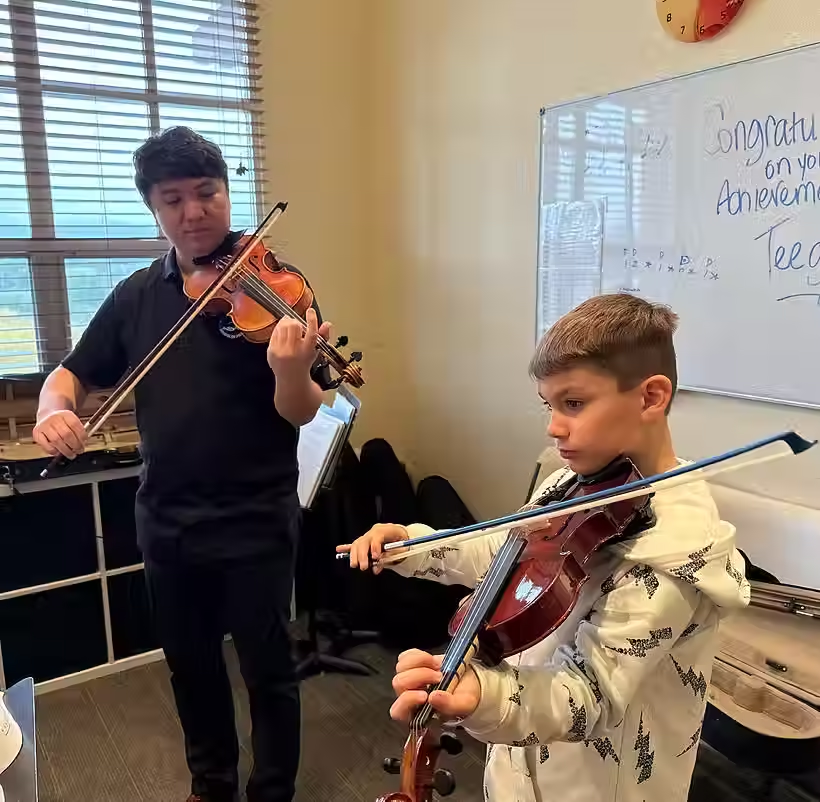
Violin Lessons for Beginners
Violin offers a very different learning experience from piano and guitar. There are no keys or frets showing exactly where each note belongs, so beginners develop a strong awareness of pitch, posture, bow control, and listening.
Violin lessons in Napa may appeal to students interested in:
Classical music
Orchestras and ensembles
Developing strong listening skills
Detailed technical work
Playing melodies
Long-term musical development
The instrument also requires appropriate sizing for younger students. Children's violins come in fractional sizes, and the right size depends on the student's physical measurements rather than age alone.
Violin may be a particularly good fit if your child enjoys classical music, has patience for gradual skill development, or is interested in orchestras and ensemble playing.
Other Instruments to Consider
Piano, guitar, and violin are common starting points, but they are far from the only options.
Napa School of Music offers instruction across a broad range of instruments, including voice, piano, keyboards, guitar, bass, drums, percussion, violin, viola, cello, ukulele, mandolin, banjo, and flute.
Drums and Percussion
Drums can be an excellent choice for students who naturally respond to rhythm and movement.
They can help students explore:
Timing
Coordination
Rhythm
Musical listening
Ensemble playing
Performance
Students who find sitting still for traditional lessons challenging may find rhythm-based instruction particularly engaging.
Ukulele
Ukulele offers a smaller, lightweight alternative to guitar and can be approachable for students who want to begin with chords and strumming.
It can also be a practical option for families looking for an instrument that is easy to transport and store.
Voice
The voice is an instrument too. Students who constantly sing at home or enjoy performing may find voice lessons more motivating than learning a traditional instrument.
Voice instruction can address breathing, pitch, vocal technique, musical interpretation, and performance skills.
Cello and Viola
Students interested in string instruments do not have to choose violin automatically. Viola and cello provide different tonal ranges and playing experiences.
A teacher can help determine which string instrument best matches a student's physical readiness, musical interests, and goals.
Age and Readiness Matter
There is no universal age at which every child should begin the same instrument.
Instead, consider whether the student can:
Follow simple instructions
Stay engaged for the duration of a lesson
Show genuine interest in music
Handle basic practice expectations
Use the instrument safely and comfortably
Communicate what they enjoy or dislike
Very young children may benefit from age-appropriate introductory music programs rather than immediately starting traditional instrumental instruction.
Napa School of Music offers early childhood music programming for children from 18 months through 5 years, alongside private and group instruction for older students.
For school-age beginners, the appropriate instrument can often be selected based on a combination of readiness and genuine interest.

Learning Style Can Help Guide the Decision
Every student learns differently.
Visual Learners
Students who enjoy patterns, written information, and seeing how things fit together may respond well to piano.
Auditory Learners
Students who naturally listen closely to melodies and pitch may enjoy voice, violin, or other melodic instruments.
Hands-On Learners
Students who prefer physical activity and experimentation may enjoy guitar, drums, or percussion.
Social Learners
Students who are motivated by playing with others may eventually thrive with guitar, drums, or ensemble-based string instruments.
These categories are not rigid. Most students use several learning styles, and an experienced teacher can adapt instruction accordingly.
Think About the Student's Musical Goals
The right instrument can also depend on what the student hopes to accomplish.
"I Just Want to Have Fun"
Choose an instrument that makes the student excited to play. Enjoyment is a strong foundation for consistent practice.
"I Want to Play My Favourite Songs"
Piano and guitar can be particularly practical choices because both offer clear pathways into popular repertoire.
"I Want to Perform"
Almost any instrument can lead to performance opportunities. The best choice is usually the one the student is genuinely motivated to practice.
"I Want to Join a Band"
Guitar, bass, drums, keyboards, and vocals can provide natural pathways into contemporary group music.
"I Want to Play in an Orchestra"
Violin, viola, cello, and other orchestral instruments may be more appropriate.
"I May Want to Study Music Seriously"
Piano can provide a particularly broad foundation in harmony, melody, rhythm, and music theory, but any instrument can support serious musical development with the right instruction and commitment.
Private vs. Group Lessons: Which Is Better for a Beginner?
The choice of instrument and the choice of lesson format are related, but they are not the same decision.
Private music lessons in Napa provide one-on-one attention, allowing an instructor to adjust the lesson pace and material around the individual student. Napa School of Music describes its private lessons as personalized instruction covering areas such as technique, music theory, ear training, repertoire, and performance.
Group lessons offer a different experience. Students learn alongside peers, which can encourage listening, teamwork, social interaction, and confidence.
For some beginners, private instruction is the easiest way to establish foundational technique. For others, the social energy of a group environment is what keeps them motivated.
There is no universal winner. The student's personality, goals, age, and preferred learning environment should guide the decision.
How Much Practice Does a Beginner Need?
A new student does not necessarily need hours of daily practice.
For beginners, consistent practice is usually more useful than occasional long sessions.
A young student might begin with a manageable routine that fits naturally into the family schedule. As skills and motivation develop, practice time can increase.
Parents can help by creating:
A predictable practice time
A quiet place to play
Easy access to the instrument
Encouragement rather than pressure
Small, achievable goals
Opportunities to play favourite songs
The objective is to establish a sustainable habit. If practice becomes an overwhelming obligation from the beginning, motivation can suffer.
How to Choose the Right Instrument for Your Child
If your family is still deciding, use this simple process.
1. Ask What Music They Like
Start with their existing interests rather than choosing an instrument based only on what seems academically beneficial.
2. Watch How They Learn
Do they enjoy patterns? Rhythm? Singing? Physical activity? Detailed tasks? These clues can help narrow the options.
3. Consider Physical Readiness
Instrument size, posture, hand strength, coordination, and comfort can matter, particularly for younger students.
4. Think About Your Home Environment
Consider available space, noise level, transportation, and whether the family can accommodate regular practice.
5. Consider the Commitment
Every instrument requires practice. The question is whether the student is interested enough to make that practice meaningful.
6. Talk With a Music Teacher
A qualified teacher can provide an objective perspective and help match the student with an instrument, lesson format, and learning approach.
7. Start With a Manageable Commitment
Beginning lessons does not require deciding a child's entire musical future. A beginner can explore an instrument, develop foundational skills, and reassess goals as their interests become clearer.
Why the Teacher May Matter More Than the Instrument
Choosing a good instrument is important, but the quality of the learning experience can have an equally significant impact on whether a beginner continues.
A supportive teacher can make challenging concepts feel achievable, select repertoire that keeps students interested, adjust the pace when necessary, and recognize progress along the way.
Napa School of Music has provided music instruction since 2005 and offers private lessons for beginners through advanced students.
The school describes its instructors as experienced educators who tailor lessons around individual goals, interests, and learning styles.
That personalized approach is especially useful when a student is still discovering what type of musician they want to become.
Frequently Asked Questions
What is the best instrument for a beginner?
There is no single best instrument for everyone. Piano and guitar are common beginner choices because they offer accessible pathways into melodies, chords, and familiar songs. Violin, drums, voice, ukulele, and other instruments can also be excellent choices when they match the student's interests and goals.
Is piano or guitar better for a child?
Neither is automatically better. Piano may appeal to children who enjoy structure, patterns, melodies, and visual learning. Guitar may be more appealing to children interested in contemporary songs, chords, singing, and playing with others.
What age should a child start music lessons?
The appropriate age depends on the child's readiness and the instrument. Some children can participate in early childhood music programs before beginning traditional instrumental lessons, while school-age children can often start private instruction when they are ready to follow instructions and engage with the instrument.
Are private music lessons better for beginners?
Private lessons can provide highly personalized instruction and immediate teacher feedback. Group lessons can offer social interaction and ensemble experience. The best option depends on the student's personality, goals, age, and preferred learning environment.
How often should a beginner practice?
Beginners generally benefit from regular, manageable practice sessions rather than occasional marathon sessions. A teacher can recommend a practice routine based on the student's age, instrument, current level, and goals.
Should I buy an expensive instrument before lessons?
Not necessarily. It can be more practical to start lessons first and discuss instrument requirements with the teacher. This is particularly useful for young students who may need a different instrument size as they grow or who are still determining whether they want to continue.
Can adults start music lessons as complete beginners?
Absolutely. Music education is not limited to children. Napa School of Music provides private instruction for students of different ages and skill levels, including beginners.
Where can I find music lessons in Napa CA?
Napa School of Music offers private and group music programs for students in Napa, including instruction in piano, guitar, voice, drums, strings, ukulele, and other instruments. The school provides personalized private instruction for ages 5 and up.
Find the Instrument That Makes You Want to Keep Playing
Choosing a first instrument does not have to be a permanent decision. The most important goal is to create a positive first experience with music.
Start with the student's interests. Consider their age, learning style, goals, and practical needs. Then work with an experienced teacher who can help turn that interest into a realistic learning path.
Whether that leads to piano lessons in Napa, guitar lessons in Napa, violin lessons in Napa, voice, drums, or another instrument, the right beginning can make learning music an experience that lasts for years.
Napa School of Music offers private music lessons in Napa for beginners through advanced students, with instruction tailored to individual interests and goals. The school teaches a wide range of instruments and provides options for different ages and learning preferences.
Ready to find the right starting point?
Call Napa School of Music at 707-252-4040 or visit Napa School of Music to explore available lessons and find an instrument that fits your musical goals.


Comments