


Signing a child up for their first violin lesson is exciting — and a little overwhelming, if you've never shopped for rosin or wondered whether a quarter-size violin is really necessary. This starter guide covers what parents actually need to know before beginning violin lessons Napa families ask about most: sizing, basic care, practice habits, and how different teaching approaches work.
Why Violin Is a Great First Instrument for Kids
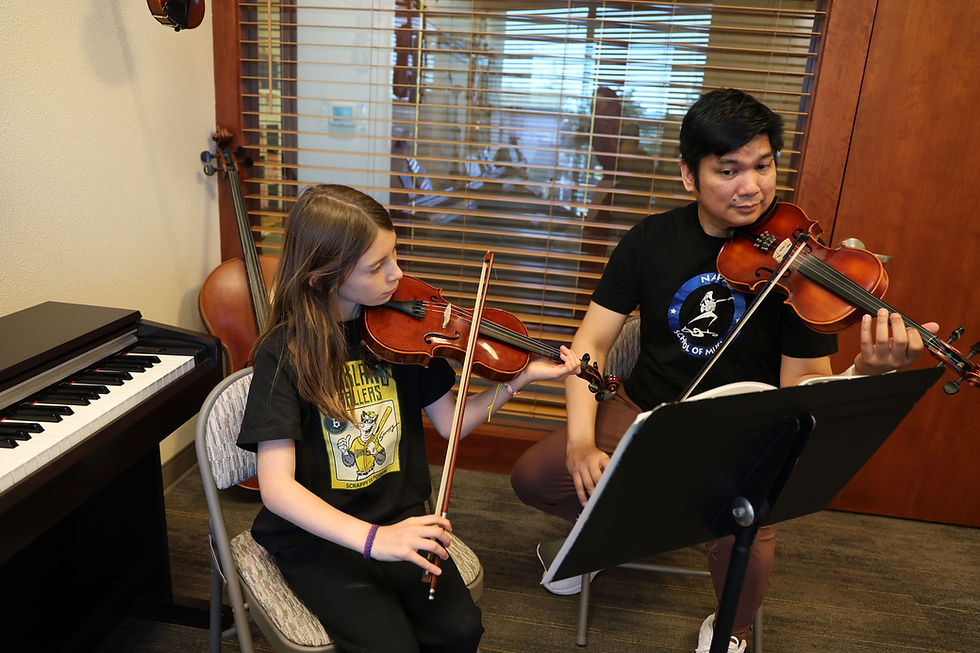
Violin builds fine motor coordination, ear training, and reading skills in a way few other instruments do, and its smaller size makes it genuinely accessible for young children in a way a full-size instrument isn't. It's one of the most common starting points for families exploring kids violin lessons for the first time.
It Grows With Your Child
Because violins come in fractional sizes, a child can start young and simply move up to a larger instrument as they grow, rather than starting over on something new.
How to Know if Your Child Is Ready for Violin Lessons
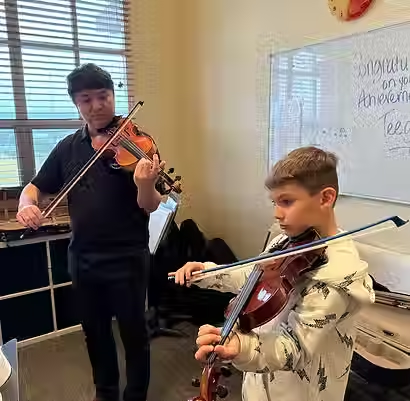
Readiness has more to do with attention span, curiosity, and comfort following simple directions than with any specific age. Our post on how to know if your child is ready for music lessons covers general readiness signs that apply well beyond violin specifically.
Trial Lessons Take the Guesswork Out
A trial lesson is often the clearest way to see whether a child is genuinely interested, rather than guessing based on age alone.
Violin Lessons Napa Families Should Know: Getting the Right Size Violin
Violin sizing matters more than almost any other beginner decision. A violin that's too large is genuinely difficult for a small child to hold, bow, or finger correctly, which can slow progress and even contribute to poor early habits.
How Sizing Actually Works
Violins are sized fractionally — common sizes include 1/16, 1/10, 1/8, 1/4, 1/2, 3/4, and full size — based mostly on arm length rather than age or height alone. A teacher measuring your child in person is far more reliable than an online size chart.
Kids Outgrow Violins Faster Than You'd Expect
Younger beginners often move up a size every year or so, which is part of why many families start with a rental instrument rather than buying outright.
Renting vs. Buying: What Most Napa Families Start With

For a young beginner who will need to size up multiple times, renting is usually the more practical starting point, both financially and logistically. Violin, viola, and cello lessons at Napa School of Music let students use one of the school's instruments for their very first lesson, which takes the pressure off buying anything before you know your child wants to stick with it.
When Buying Makes More Sense
Once a child reaches a more stable size — often closer to 3/4 or full size — or has clearly committed to the instrument, buying can become more cost-effective than continuing to rent.
Rosin, Bow Care, and Basic Violin Maintenance for Beginners

Rosin — a treated resin applied to the bow hair — is what allows the bow to actually grip the strings and produce sound. Without it, a bow simply glides across the strings without much tone at all.
A Few Basic Care Habits Worth Learning Early
Apply rosin to the bow a few strokes before each practice session, not excessively
Wipe rosin dust off the strings and body after playing
Loosen the bow hair slightly when not in use to preserve its tension
Store the violin in its case away from extreme heat or humidity
These habits are simple, but building them early tends to prevent bigger instrument care issues down the road.
Building Practice Habits That Actually Stick

Short, consistent practice sessions tend to work far better for young beginners than long, infrequent ones. Ten to fifteen focused minutes most days of the week is often more productive than a single 45-minute session once a week.
Making Practice Feel Manageable, Not Like a Chore
Breaking practice into small, specific goals — like one passage or one technique — rather than "practice for 20 minutes" tends to keep young kids more engaged and gives them a clearer sense of progress.
Method Approaches: Suzuki, Traditional, and Blended Styles

Different violin teaching philosophies emphasize different starting points. The Suzuki Association of the Americas promotes a method built around listening and imitation before reading notation, often starting with very young children alongside parent involvement. More traditional approaches tend to introduce reading music earlier alongside technique. Many teachers, including those affiliated with the American String Teachers Association, blend elements of multiple approaches based on what fits a specific student best.
There's No Single "Right" Method
The right approach depends on your child's age, learning style, and goals — which is part of why a personalized lesson plan, rather than a one-size-fits-all curriculum, tends to work better for most beginners.
Violin vs. Viola vs. Cello: Which Instrument Fits Your Child?
Napa School of Music teaches violin, viola, and cello, and families sometimes aren't sure which is the right starting point. Violin is the smallest and highest-pitched of the three, and often the most common starting instrument for young beginners. Viola is slightly larger with a deeper tone, while cello is significantly larger and played seated — a consideration worth factoring in for very young or smaller children.
Trying Before Committing
Since instructors work with families directly to craft a lesson plan around the student's goals, it's worth discussing all three options with a teacher rather than deciding based on assumptions alone.
What to Expect From Your Child's First Violin Lessons in Napa
A first lesson typically focuses on posture, how to hold the instrument and bow, and simple open-string exercises rather than jumping straight into songs. Group class options are also available for families who want a more social starting point — our post on 5 ways group music lessons enhance social skills in learners covers what that experience tends to look like.
Napa School of Music has served Napa Valley families since 2005, with roughly 550 students taking lessons each week — a track record that reflects real, ongoing experience working with beginner string students specifically.
Frequently Asked Questions
1. What age should a child start violin lessons?
There's no single right age, but many children begin between ages 5 and 8, depending on attention span, interest, and readiness rather than age alone.
2. How do I know what size violin my child needs?
Violin sizing is based mostly on arm length rather than age or height, so an in-person measurement from a teacher is the most reliable way to determine the right fractional size.
3. Should I buy or rent a violin for my beginner?
Renting is usually more practical for young beginners, since they'll likely need to size up as they grow. Buying tends to make more sense once a child reaches a more stable size.
4. What is rosin, and why does my child's violin need it?
Rosin is a treated resin applied to the bow hair that allows it to grip the strings and produce sound. Without it, the bow glides across the strings with little tone.
5. How often should a beginner practice violin?
Short, consistent sessions — around 10 to 15 focused minutes most days — tend to work better for young beginners than long, infrequent practice sessions.
6. What's the difference between the Suzuki method and traditional violin teaching?
Suzuki emphasizes listening and imitation before reading notation, often with parent involvement, while traditional approaches tend to introduce note reading earlier. Many teachers blend elements of both.
7. Should my child start with violin, viola, or cello?
It depends on the child's size, interest, and goals. Violin is the smallest and most common starting instrument, while viola and cello are larger and suited to different preferences.
8. Does my child need their own violin before the first lesson?
Not necessarily. Many programs, including Napa School of Music, let beginners use a school instrument for their very first lesson before committing to a rental or purchase.
Start Violin Lessons in Napa With Confidence
From sizing to practice habits, getting started on violin doesn't have to feel overwhelming. Napa School of Music has helped Napa Valley families begin their musical journey since 2005, with instructors who tailor every lesson plan to the student.
Schedule your child's first violin lesson: 📞 707-252-4040 🌐 www.napaschoolofmusic.com


Comments