


Ukulele vs Guitar for Beginners: Which Instrument Should Your Child Start With?
If your five-to-ten-year-old wants to start making music, you've probably landed on the same question a lot of parents do: ukulele or guitar? The ukulele vs guitar for beginners debate isn't really about which instrument is "better" — it's about which one fits your child's age, hands, and goals right now. Here's how to think it through.
Ukulele vs. Guitar for Beginners: The Quick Answer for Most Families
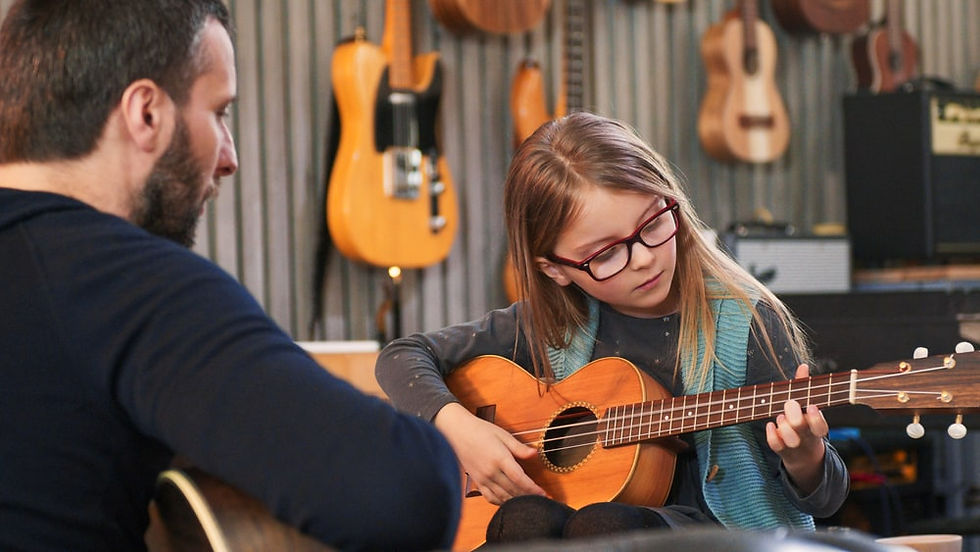
For most children between 5 and 10, ukulele tends to be the easier starting point, while guitar offers more long-term range as they grow. Neither is the "wrong" choice — it depends on your child's hand size, patience level, and what kind of music they're drawn to.
Both Are Available at the Same School
Napa School of Music teaches both guitar and ukulele, so switching between them later — or trying both — doesn't mean starting over at a new school.
Why Ukulele Is Often the Easier Starting Point

Ukuleles are smaller, lighter, and strung with soft nylon strings that are far gentler on young, still-developing fingers than steel guitar strings.
Fewer Strings, Simpler Chord Shapes
With just four strings compared to a guitar's six, basic ukulele chords are physically easier for small hands to form, which means young beginners can play recognizable songs sooner — a genuinely motivating early win. That early sense of "I can actually play something" tends to matter more for keeping a five- or six-year-old engaged than any technical advantage.
Why Guitar Has a Broader Long-Term Range

Guitar opens the door to a wider range of genres, more advanced repertoire, and — for kids who stick with music into their teens — more overlap with bass, electric guitar, and band settings later on.
The Trade-Off Is a Steeper Start
Guitar strings require more finger strength and slightly larger hand stretches than ukulele, which can be more frustrating for a five- or six-year-old in the very first weeks of lessons. That said, plenty of young kids push through this stage just fine, especially when they're genuinely motivated by a specific song, artist, or style they want to play.
Side-by-Side Comparison: Ukulele vs. Guitar for Beginners

Factor | Ukulele | Guitar |
Number of strings | 4 | 6 |
String type | Soft nylon | Steel (acoustic) or nylon (classical) |
Typical starting age | As young as 4–5 | Usually 6–7 and up |
Learning curve | Gentler, faster early wins | Steeper at first |
Long-term musical range | Narrower, but great for songwriting and singing | Broad — rock, folk, classical, and more |
Portability | Very portable, lightweight | Larger, less portable |
What Age Matters Most for Each Instrument

Ukulele's smaller size and softer strings make it approachable for kids as young as 4 or 5, while guitar is often a better fit starting around age 6 or 7, once hand strength and finger stretch have developed further. Our post on how to know if your child is ready for music lessons covers readiness signs that apply to either instrument.
Readiness Matters More Than a Strict Age Cutoff
Some six-year-olds are ready for guitar's bigger stretch; some eight-year-olds still do better starting on ukulele. A trial lesson is often the clearest way to see what actually fits.
Cost Comparison: Which Instrument Costs Less to Start
Ukuleles are generally less expensive than guitars at the beginner level, both to purchase and to maintain, which can make them an appealing lower-commitment starting point for families who aren't sure yet how long their child's interest will last.
Renting vs. Buying Either Instrument
Napa School of Music lets students use a school instrument for their very first lesson on either instrument, so families don't need to buy anything before knowing if it's the right fit.
Can Learning Ukulele First Make Guitar Easier Later?
Many kids who start on ukulele transition to guitar more confidently later, since they've already built reading skills, rhythm, and basic chord-shape logic — even though the specific chord shapes themselves don't transfer directly.
What Actually Transfers
Music reading, ear training, strumming rhythm, and general instrument comfort all carry over from ukulele to guitar, even if a child has to relearn chord fingerings on the new instrument.
Signs Your Child Might Prefer One Over the Other
A child who gets easily frustrated with physical challenges may do better starting on ukulele's gentler learning curve. A child who's specifically drawn to rock, singer-songwriter music, or a favorite guitar-playing artist may stay more motivated starting directly on guitar, even if the first few weeks are a bit harder. Watching how your child responds during a trial lesson on each instrument is often more informative than guessing from personality alone.
Napa School of Music has served Napa Valley families since 2005, with instructors experienced in helping young beginners choose — and switch between — instruments as they grow. Whichever instrument your child starts with, the National Association for Music Education notes that early, consistent music instruction supports skills well beyond the instrument itself, from listening and coordination to discipline and confidence.
Frequently Asked Questions
1. Is ukulele really easier than guitar for kids?
For most young beginners, yes. Ukulele has fewer strings, softer nylon strings, and a smaller size that's easier for small hands, which tends to produce faster early progress.
2. What age should a child start guitar instead of ukulele?
Many children are ready for guitar around age 6 or 7, once hand strength and finger stretch have developed, though readiness varies by child.
3. Does learning ukulele first make it easier to learn guitar later?
It can help with reading music, rhythm, and general instrument comfort, even though the specific chord shapes are different between the two instruments.
4. Which instrument is cheaper to start with, ukulele or guitar?
Ukuleles are generally less expensive than guitars at the beginner level, both to purchase and maintain.
5. Can my child try both ukulele and guitar before deciding?
Yes. Many programs, including Napa School of Music, let students use a school instrument for their first lesson, making it easy to try before committing to either.
6. Is ukulele just a "toy" instrument, or can kids get seriously good at it?
Ukulele is a genuine instrument capable of real musical depth — many accomplished musicians play it seriously, and it's not just a simplified starter toy.
7. What's the biggest long-term difference between ukulele and guitar?
Guitar offers a broader range of genres and more overlap with other instruments like bass and electric guitar later on, while ukulele tends to stay more focused on strumming-and-singing styles.
8. Should my child pick the instrument they're most excited about, even if it's the harder one?
Motivation matters a lot in the early stages, so a child's genuine excitement about an instrument is worth weighing alongside how physically demanding it is to start.
Help Your Child Choose Their First Instrument
Whether it's ukulele's easy start or guitar's long-term range, Napa School of Music offers both — with instructors who help families choose confidently and switch course if needed.
Schedule a trial lesson today: 📞 707-252-4040 🌐 www.napaschoolofmusic.com


