


How Music Lessons Build Self-Esteem in Children
If you're still deciding whether music lessons are worth it, the honest answer is that the instrument itself is only part of the story. Music and self-esteem in children are connected in ways that go well beyond learning to read notes or play a scale — it's about what happens to a child's sense of self along the way. Here's what the research says, and how that confidence actually gets built, lesson by lesson.
Jump to: More Than Learning an Instrument · What the Research Says · The Practice-Progress-Pride Cycle · Why Recitals Matter · A Safe Place to Struggle · Discipline Alongside Confidence · Group Lessons and Belonging · Signs It's Already Working · FAQs
Music and Self-Esteem Children Build Through Lessons: More Than Just an Instrument

Parents often enroll a child in music lessons hoping for a new skill or a fun hobby, and that's a completely reasonable starting point. But music and self-esteem in children turn out to be closely linked — the process of learning an instrument builds something under the surface that shows up well beyond the practice room.
Why This Matters More Than It Might Seem
A child who feels genuinely capable at something specific often carries that confidence into other parts of life — schoolwork, friendships, trying new things — even when those areas have nothing to do with music itself.
What the Research Actually Says About Music and Self-Esteem

This isn't just anecdotal. A well-designed study published in Psychology of Music followed children over three years and found that those in school-based music classes maintained their self-esteem over time, while children in a control group without music education experienced a measurable decline. The National Association for Music Education similarly points to music learning as a meaningful way children build self-confidence and practice being self-aware alongside their peers.
Why Music Specifically Seems to Matter
Music lessons combine repeated practice, visible progress, and regular small wins in a way that's harder to replicate in less structured activities — a combination researchers increasingly connect to durable gains in self-esteem, not just temporary enjoyment.
The Practice-Progress-Pride Cycle: How Confidence Actually Builds

Confidence in music lessons tends to build through a repeating cycle: a child practices something specific, notices real improvement, and feels genuine pride in that progress — which then makes the next challenge feel more approachable than it otherwise would.
Small, Frequent Wins Matter More Than Big Ones
A child doesn't need to master an entire piece to feel the effect — noticing that a passage that was difficult last week is easier this week is often enough to reinforce the belief that effort actually leads somewhere.
Why Recitals and Performances Matter More Than They Seem To

Performing in front of others — even a small, supportive recital audience — asks a child to trust their own preparation and follow through despite nerves. Successfully doing that, even imperfectly, tends to leave a lasting impression on how a child sees their own capability.
It's Not About a Flawless Performance
Kids rarely remember a recital as flawless — what tends to stick is the fact that they did it at all, which is often the more meaningful confidence builder than technical perfection.
Music as a Safe Place to Struggle (and Recover)
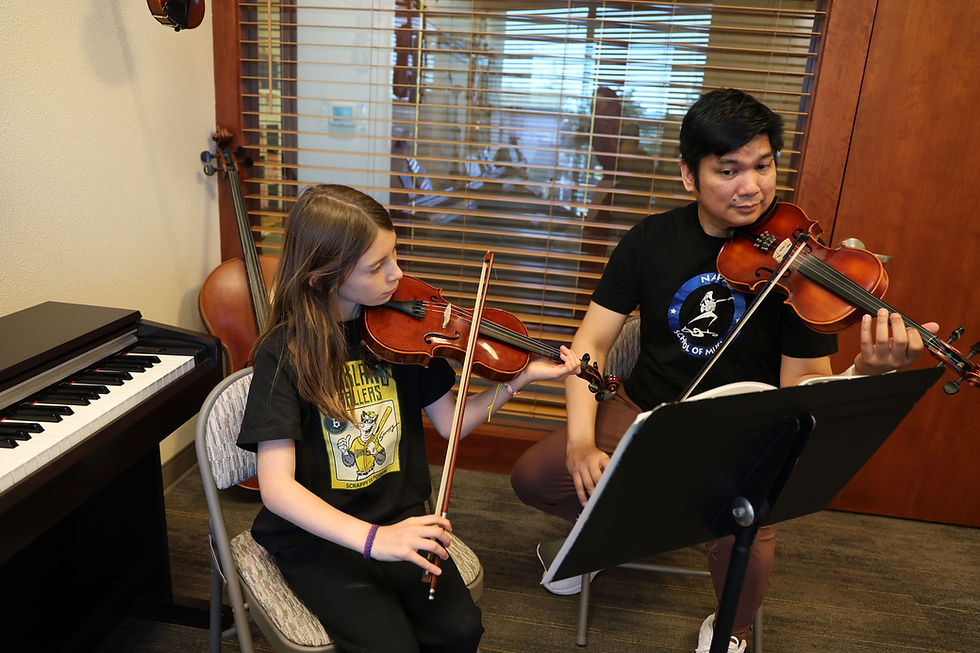
Learning an instrument means hitting wrong notes, losing the rhythm, and getting frustrated — regularly. A good lesson environment treats that struggle as a normal, expected part of learning rather than a failure, which teaches children something valuable: that struggling with something new doesn't mean they're bad at it.
This Skill Transfers Well Beyond Music
Kids who learn to sit with frustration in a low-stakes setting like a music lesson often handle setbacks in school or other activities with more resilience, since they've already practiced not giving up the first time something feels hard.
How Music Lessons Build Discipline Alongside Confidence

Consistent practice requires a child to show up and put in effort even on days when they don't feel like it — a genuinely useful life skill that develops naturally through regular lessons, without needing to be taught as a separate lesson in willpower.
Discipline and Confidence Reinforce Each Other
The more consistently a child practices, the more visible progress they see, which reinforces both their confidence and their motivation to keep showing up — a cycle that tends to feed itself once it gets going.
Group Lessons and Belonging: The Social Side of Self-Esteem
Confidence doesn't only come from individual achievement — being part of a group working toward something together adds a social dimension that private lessons alone don't fully provide. Our post on 5 ways group music lessons enhance social skills in learners covers how ensemble and group settings specifically support this.
Belonging Reinforces Individual Confidence
Feeling like a valued part of a group — a band, an ensemble, a class — gives children another source of self-worth beyond individual skill, which can matter especially for kids who are quieter or less naturally outgoing.
Signs Your Child Is Already Building Confidence Through Music
Wanting to show family members what they've learned, unprompted
Talking about a piece or skill they're proud of
Handling a mistake during practice without becoming discouraged
Asking to keep practicing past the assigned time
Not every child shows these signs the same way or on the same timeline — our post on how to know if your child is ready for music lessons covers readiness signs if you're still deciding whether now is the right time to start.
Napa School of Music has spent two decades watching this play out firsthand — as our founder often puts it, the school has become less about teaching notes and rhythms and more about nurturing genuine self-esteem in the students who walk through our doors, whether they're learning violin, guitar, or starting with our preschool music programs.
Frequently Asked Questions
1. Is there real research connecting music lessons to self-esteem in children?
Yes. A multi-year study published in Psychology of Music found that children in school-based music classes maintained their self-esteem over time, while a comparison group without music education saw a measurable decline.
2. Does my child need to be naturally talented for music lessons to build confidence?
No. The confidence-building effect comes largely from visible progress and consistent effort over time, not from natural talent or starting skill level.
3. How do recitals help build a child's confidence?
Performing in front of others, even in a small setting, asks a child to trust their preparation despite nerves — successfully doing that tends to leave a lasting sense of capability, regardless of how "perfect" the performance was.
4. Can music lessons help a child who struggles with confidence in other areas, like school?
Many parents report that confidence built through music does carry over into other areas, since children practice persistence and handling setbacks in a lower-stakes setting first.
5. Do group lessons build self-esteem differently than private lessons?
Group lessons add a social dimension — belonging to something bigger than individual achievement — that can be especially valuable for children who benefit from feeling part of a team or ensemble.
6. How long does it typically take to see a confidence boost from music lessons?
It varies by child, but many parents notice early signs — like wanting to show off a new skill or handling mistakes more calmly — well before a child reaches any advanced level.
7. What are some signs my child is already gaining confidence from lessons?
Wanting to perform for family unprompted, talking proudly about a skill, and staying calm through a practice mistake are all common early signs.
8. What age should a child start music lessons to get these self-esteem benefits?
Confidence-building benefits have been observed across a wide age range, including preschool-level programs — readiness matters more than hitting a specific age.
Help Your Child Discover Their Own Confidence
Music lessons teach a lot more than notes and rhythm — they build the kind of confidence that carries into everything else. Napa School of Music has spent two decades helping students discover exactly that.
Schedule a trial lesson today: 📞 707-252-4040 🌐 www.napaschoolofmusic.com

